

In Brief: Key Takeaways
About This Series on Movement
Our modern lives often force us into sedentary patterns that are fundamentally at odds with our evolutionary design. This 5-part series is a comprehensive guide to understanding why movement is not just exercise, but a biological necessity for health, vitality, and a pain-free life. Each part builds on the last, offering both the ‘why’ and the ‘how’ of integrating healthy movement back into your daily routine.
Part 1: An Evolutionary Perspective
We begin by looking back millions of years. Our bodies are designed for a hunter-gatherer lifestyle filled with walking, running, and squatting. This article explains the evolutionary basis for our need to move and what happens when we don’t honor this biological blueprint. Read more in Part 1.
Part 2: Understanding Fascia, Your Body’s Elastic Web
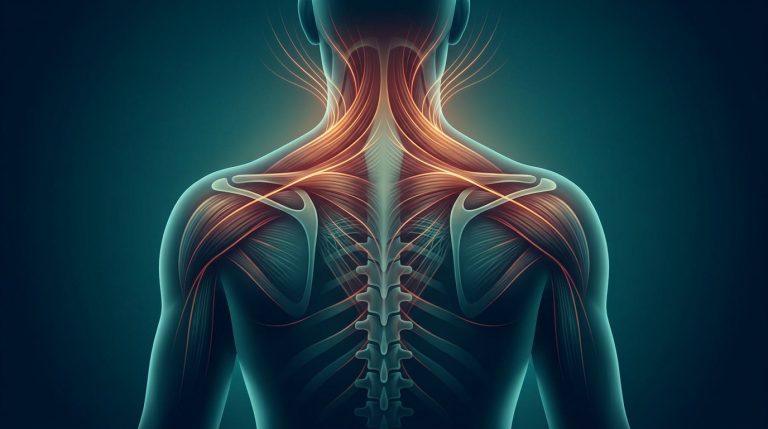
Fascia is a critical part of our musculoskeletal system. It’s an elastic web that wraps around muscles, bones, and organs, connecting everything into a single, functional unit. Unlike muscles, fascia acts like a spring, storing and releasing energy. Most of our body’s pain sensors are located in the fascia, and when it loses its elasticity due to inactivity, it can become a primary source of pain and restricted movement. Read more in Part 2.
Part 3: Why ‘Sitting is the New Smoking’
Did you know that ‘sitting too much’ is a separate health risk from ‘not exercising enough’? Prolonged sitting dramatically increases the risk for many diseases, particularly metabolic issues. It is linked to a higher risk of heart disease, elevated triglycerides, high blood sugar, and insulin resistance. This article provides the information and solutions you need to combat this modern danger. Read more in Part 3.
Part 4: Exercise – How Much and What Kind?
We are evolutionarily programmed to walk long distances and stay in motion. To maintain the health of our muscles and fascia and live without pain, we must move. But what is the best type of physical activity for us? How much exercise should we aim for? This article provides the answers. Read more in Part 4.
Part 5: A Practical Guide to Preventing Pain
Muscle pain is often the result of improper use. Whether we move too little, too much, or in the wrong way, pain is a signal that our current habits are not serving our bodies well. This final part of the series offers practical strategies for moving correctly and preventing pain before it starts. Read more in Part 5.