
In Brief: Key Takeaways
In this article I share my personal view of health and illness, shaped by years of clinical work with patients. It reflects the way I think and doesn’t replace advice tailored to you.
Two friends finish lunch with an espresso at four in the afternoon. One of them sleeps soundly that night. The other is still staring at the ceiling at two in the morning, wondering why. Same coffee, same cup, same time of day, and two completely different nights.
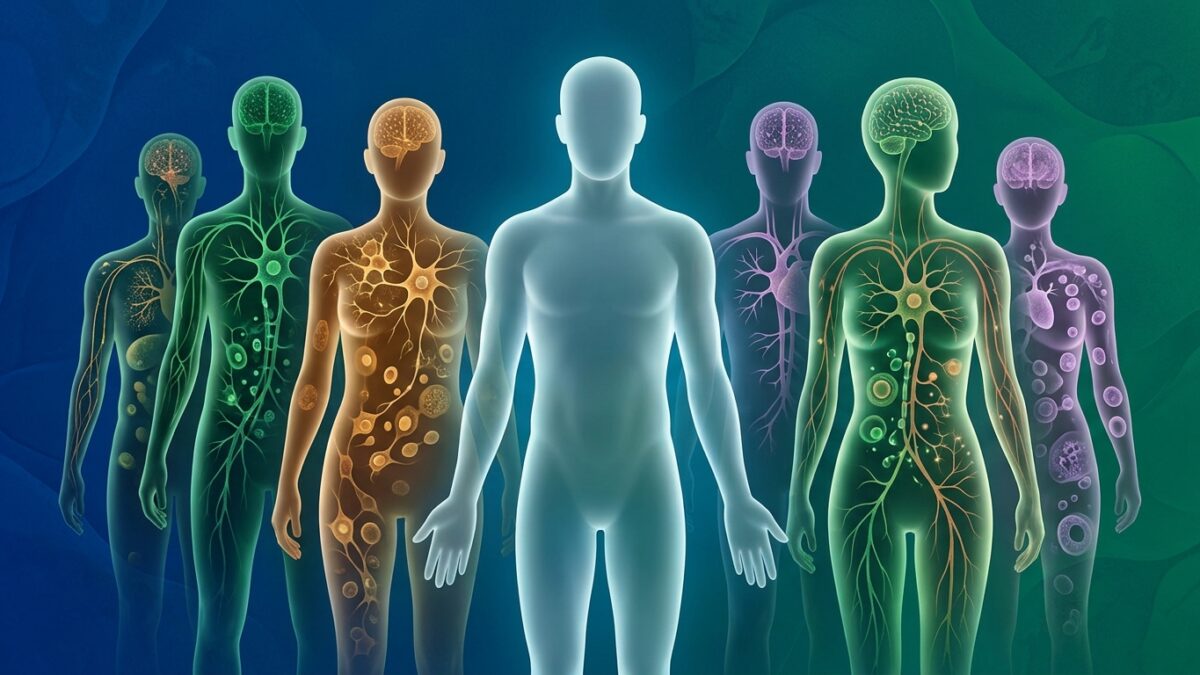
It’s a small example, but it holds the most important idea in the way I view health: every person is a unique individual, and no food, supplement, remedy, or treatment works the same way for everyone. This is the first of five principles that reflect how I see health and disease, and it’s the one the other four rest on.
You are not the average of a study
Most health advice comes from research, and research reports averages. A study might find that, on average, people lost the same amount of weight on a low-fat diet as on a low-carb one. That sounds like the two diets are equal. But as Chris Kresser points out, an average like that can hide huge differences between individuals. Some participants did far better on one diet, some did far better on the other, and the average simply cancelled them out.
So when you read that something “works” or “doesn’t work,” it’s worth asking a different question: works for whom? A result that holds for the average participant may not hold for you, because nobody is actually the average participant.
What makes your body different from mine
Back to the espresso. Our genes partly decide how quickly the liver breaks down caffeine. Dr. Mark Hyman describes “fast metabolizers,” who clear caffeine quickly, and people who clear it slowly and stay wired for hours. For the slow group, that afternoon coffee is still working at midnight.
Genes are only part of the picture. Several other layers shape how your body responds to anything you give it:
- Your gut bacteria, which help digest food, produce some vitamins, and influence how you react to particular foods. No two people carry the same mix.
- Your history: past illnesses, antibiotics, injuries, surgeries, and the way you were fed as a child.
- Your current load: how much stress you’re under, how well you sleep, and what you’re exposed to at home and at work.
- Your stage of life. Pregnancy, menopause, a demanding new job, or simply getting older all change what your body needs.
Iron is a good example of how far apart two people can be. For a woman with heavy periods and low iron stores, an iron supplement can lift her energy within weeks. For someone with hereditary hemochromatosis, a genetic condition in which the body stores too much iron, the same supplement adds to a problem that can damage the liver and heart.
That last point on the list matters more than people expect. You are not even the same person you were five years ago. Kresser makes this point too: what works for someone at one time in their life may not work for that same person at another time. The diet that suited you at 25 may not suit you at 50.
Reading health advice with this principle in mind
None of this means that anything goes. Some general principles apply to almost everyone. A diet built mostly on processed and refined food harms the body, and a diet built on whole, unprocessed food supports it. Movement, sleep, and a sense of connection to other people matter for all of us.
The individual part begins one level down, with the specific choices. Should you eat grains or avoid them? Is dairy good for you? Which form of magnesium suits you, and how much? Does a particular herb help you or upset your stomach? These questions have no single right answer, and anyone who claims differently is likely misleading you.
That includes the articles on this site. When I write that a food or supplement can help, please read it as “this helps many people, and it’s worth checking whether it helps you.” If you’d like to see how this applies to food specifically, I’ve written a separate article on why there’s no one-size-fits-all diet.
What a personalized approach looks like in practice
The idea of individualized medicine isn’t new. The hard part has always been putting it into practice: how do you find out what a particular body actually needs?
For most functional medicine practitioners it starts with a long conversation, because the story of how symptoms began and what makes them better or worse often says more than any single test. Then comes a physical examination, including checking for tight or tender muscles, which often point to problems elsewhere in the body. Blood work and functional lab tests add another layer, especially when results are read against optimal ranges instead of the broad “normal” ranges used to rule out disease.
From there, the treatment plan is built for that one person: the foods, the supplements, the doses, the pace of change. And because bodies change, the plan is adjusted as the person responds to it.
Where to start on your own
You don’t need a clinic to begin applying this principle. Your own body is constantly giving you feedback, and the main skill is learning to notice it.
- Change one thing at a time. If you start three supplements and a new diet in the same week, you won’t know what helped or what caused the headache.
- Give each change two to three weeks before you judge it, unless it clearly makes you feel worse.
- Keep short notes on your energy, sleep, digestion, mood, and skin. Patterns that are invisible day to day become obvious over a month.
- Trust a clear reaction over a general recommendation. If a “superfood” consistently leaves you bloated, it isn’t a superfood for you.
- Bring your notes to a practitioner. Your observations make their assessment much more accurate.
This principle is also why symptoms that seem to make no sense often do. Someone who reacts to foods that are healthy for most people, for example, may be dealing with something like histamine intolerance or nickel allergy, where the issue is how their particular body handles a particular compound.
The next principle builds on this one: the body is its own best doctor, as long as it gets the conditions it needs to do its work. Knowing what those conditions are for you starts with accepting that they won’t be identical to anyone else’s.