

In Brief: Key Takeaways
In this article I share my personal view of health and illness, shaped by years of clinical work with patients. It reflects the way I think and doesn’t replace advice tailored to you.
Rethinking the Definition of Health
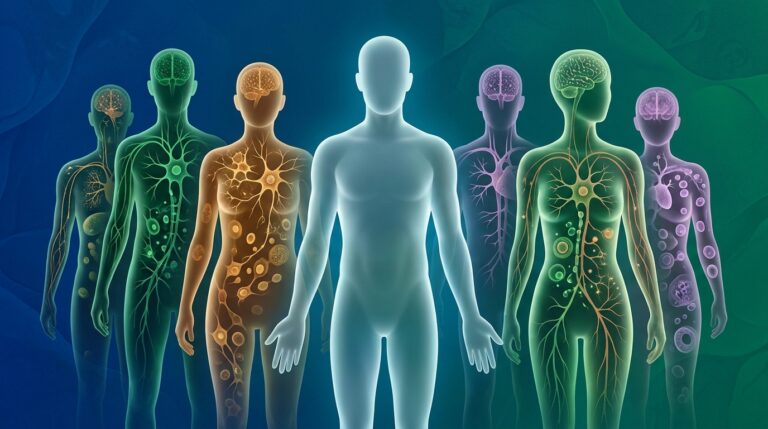
For decades, the World Health Organization (WHO) has defined health as “a state of complete physical, mental and social well-being and not merely the absence of disease or infirmity.” While well-intentioned, this definition presents a challenge. Does it mean a person born with a genetic condition or a physical disability can never be truly healthy? I have met many individuals facing such challenges who are happier and more vibrant than people with no apparent limitations or diagnosed illnesses.
This raises a fundamental point: none of us will live forever. Therefore, our goal should not be to escape the inevitable, but to live with as much joy, peace, and comfort as possible. It’s about managing challenges effectively and maximizing our quality of life until we reach the end of our journey. Based on this philosophy, I’ve developed a more practical framework for understanding well-being, which begins by distinguishing between two key concepts: maximal health and optimal health.
Understanding Maximal Health
Maximal health represents a theoretical state of perfection. To visualize this, we can use the Health Triangle model developed by Dr. George Goodheart, a pioneering chiropractor. This model posits that well-being rests on three balanced pillars:
- Structural: Complete, pain-free mobility and function of the body’s framework.
- Biochemical: Flawless functioning of every cell and system in the body.
- Mental/Emotional: A stable and calm state of mind, free from debilitating anxiety, fear, or depression.
Achieving maximal health would mean all three of these pillars are in perfect condition simultaneously. However, this ideal is complicated by our individual biological uniqueness.
The “Full Barrel” Principle: Your Unique Capacity
In the Shitat Zofia approach, we use the “Full Barrel Principle” to understand individual resilience. Imagine that each of us is born with a barrel of a specific size. This barrel represents our body’s capacity to compensate for negative factors. Throughout life, stressors like environmental toxins, poor diet, emotional trauma, and lack of sleep slowly fill this barrel.
The size of your barrel is unique. Some people have large barrels and can handle significant stress – like functioning well on only five hours of sleep – before showing signs of strain. Others have smaller barrels and may need eight or nine hours of sleep to feel their best. This explains why some people can run marathons while others are built for sprints or swimming. We are all different, and our capacity for health varies.
Why an Absence of Symptoms Isn’t Maximal Health
The Full Barrel Principle also reveals a critical distinction: being symptom-free is not the same as being in a state of maximal health. Maximal health would mean your barrel is completely empty. However, symptoms typically don’t appear until the barrel is full and begins to overflow. This process can take years, depending on the size of your barrel and the rate at which it’s filled vs. the rate at which it’s emptied.
Why Maximal Health is an Unrealistic Goal
In today’s world, achieving a completely empty barrel – true maximal health – is nearly impossible. We are constantly exposed to toxins in our air, water, and food. The pace of modern life creates a state of chronic stress for many. These factors are continuously adding to our barrels.
Furthermore, our personal histories, including genetic predispositions, past injuries, or traumas, can limit our ability to reach this theoretical peak from the outset. For these reasons, chasing an ideal of maximal health can be a frustrating and ultimately fruitless endeavor.
Embracing Optimal Health: A Personalized and Achievable Goal
Instead of striving for perfection, the goal should be to achieve optimal health. Optimal health is the best possible state of well-being for you as an individual. It is a personalized state that accounts for your unique genetics, health history, and lifestyle choices.
This approach aligns with the growing field of epigenetics, which studies how our behaviors and environment can cause changes that affect the way our genes work. According to Dr. Ben Lynch, an expert in the field, “When you know what your genes need, you can choose a diet and lifestyle that optimize your health.” By making informed choices about nutrition, lifestyle, and how we care for our bodies, we can influence our genetic expression to achieve our personal best.
Optimal health is not about reaching an external, universal standard. It’s about emptying your personal barrel as much as possible so you can live a vibrant, energetic life, free of debilitating symptoms. It is a realistic, empowering, and deeply personal journey toward well-being.