

In Brief: Key Takeaways
In this article I share my personal view of health and illness, shaped by years of clinical work with patients. It reflects the way I think and doesn’t replace advice tailored to you.
What is the Health-Illness Spectrum?
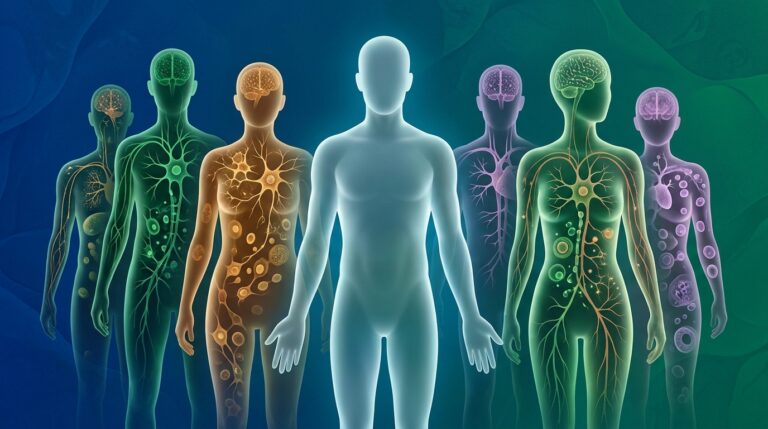
You might be asking, “Is there really a difference between my health status and my illness status?” The answer is yes, and it’s a significant one. Health and illness are not two separate, distinct states. Instead, they are opposite ends of a continuous spectrum. At one end, you have absolute, optimal health. At the other, a terminal illness. Most of us exist somewhere in the middle.
For clarity, I define “health status” as everything on the spectrum from optimal health to the midpoint. “Illness status” covers everything from that midpoint to the end stage of disease. The critical question is, why does this distinction matter so much?
The Iceberg Analogy: Why Symptoms Are Just the Tip
You would likely agree there’s a vast difference between being a short step away from peak health and approaching a serious illness. The problem is that for much of this journey, the body feels exactly the same. We can easily distinguish between feeling great (optimal health) and feeling sick (experiencing symptoms). However, the vast majority of the disease process happens silently, without our awareness, because symptoms have not yet appeared.
Once symptoms manifest, the disease has often reached a relatively advanced stage. While it varies between conditions and precise numbers are impossible to have, it’s estimated that up to 80% of a disease’s development can occur before you feel the first symptom. Think of it like an iceberg: the symptoms you see are just the small tip, while the bulk of the problem remains hidden beneath the surface.
Limitations of Conventional Blood Tests for Early Detection
“But that’s what blood tests are for!” you might say. In principle, that’s correct. In practice, however, conventional blood tests often provide limited information for early detection. Changes in standard markers frequently appear only after symptoms have already begun, when the disease is well underway.
Furthermore, because a symptomatic state of illness is the easiest to identify and define, most conventional medical tests use illness – not optimal health – as their reference point. In other words, they are designed to identify disease once it’s established, rather than to measure your proximity to true health. This makes them less effective for understanding where you truly stand on the health-illness spectrum before things go wrong.
The First Step: Understanding Your Unique Place on the Spectrum
Given these limitations, we need a better way to assess our position on the health-illness spectrum. The goal is to identify imbalances and dysfunctions long before they escalate into a full-blown, symptomatic disease. Understanding your unique body and its subtle signals is the first step toward proactive health management.
In the next part of this series, we will explore advanced and alternative diagnostic methods that can provide a more accurate and comprehensive picture of your health, helping you take control before symptoms do. Remember, every person’s journey is unique, and personalized assessment is key to navigating your path to wellness.